As featured in
BBC News interview
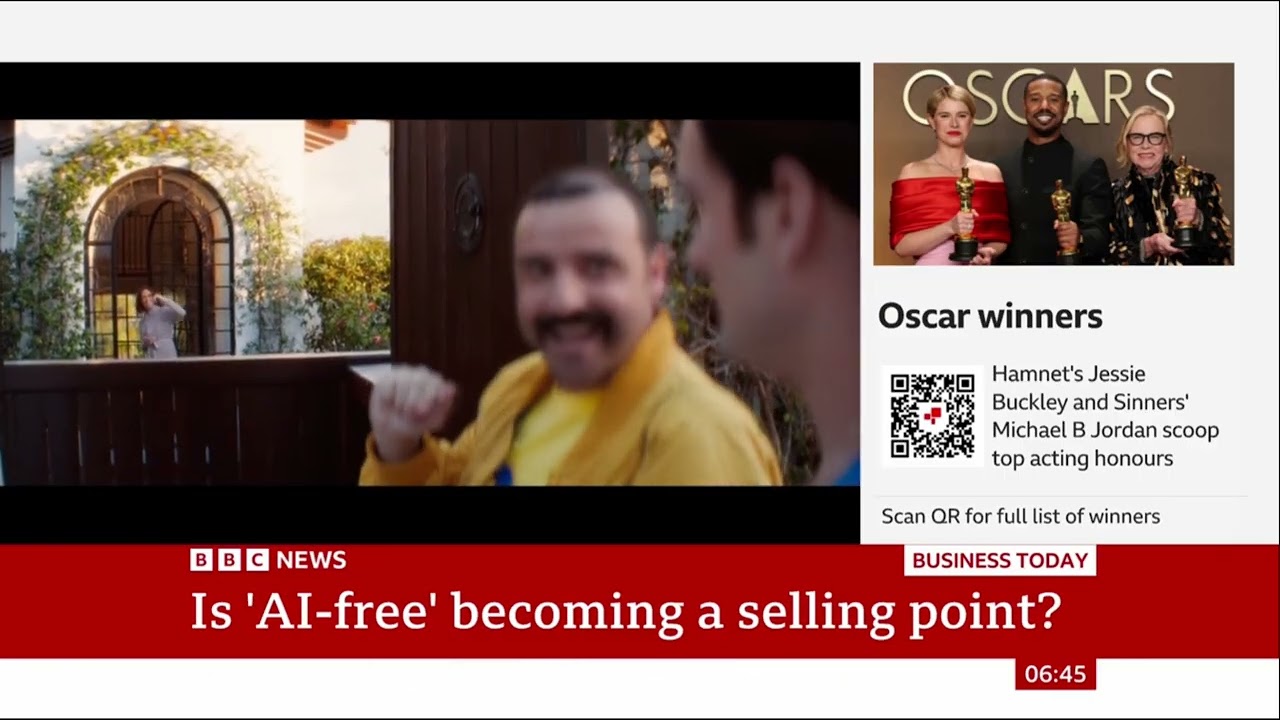
MSC originated the No AI Used label at the European Film Market in February 2026. This page covers where it came from and why we built it into a broader standard called Human Provenance in Film.
Visit the HPF siteAt this year’s European Film Market, MSC put the No AI Used label on our marketing materials. The decision was not reactive. It was a position we had held from the start and chose to make visible.
We think a film made by human hands is a different kind of asset from one that isn’t, the way a painting is different from a print. That distinction is starting to matter commercially, and the industry doesn’t yet have a consistent way to express it. Human Provenance in Film is our attempt to build one.
The standard is voluntary and open. Any producer, sales agent, or festival can use it. The only requirement is an honest account of how AI was and was not involved.
Every film on our current slate carries a disclosure under one of three categories. We include this in our marketing materials and deal documentation, and have done so for every film we have represented since EFM Berlin 2026.
No artificial intelligence tools were used in any aspect of this production. All creative and production elements were made exclusively by human crew.
AI tools were used in an assistive capacity. AI enhanced or optimised elements created by human crew. No human production or creative role was made redundant.
AI was used to replace human work within the film. Content that would otherwise have required human creative or production work was synthesised or generated by AI.
Buyers at the market wanted to know what the label actually meant, whether there was a published standard behind it, and how they could apply it to their own acquisitions. So we built one and opened it to everyone. The HPF disclosure travels with the film through chain of title documentation, the same paperwork that already governs how films are financed, sold, and distributed.
The taxonomy is currently at v0.9 and open for consultation until 31 October 2026, ahead of v1.0 ratification. It is free to use under CC BY 4.0.
A film with a clear chain of human authorship is a different asset from one without it. Provenance disclosure protects catalogue value over time. Titles that carry an HPF declaration give buyers something concrete to point to when the question of origin comes up. We think it will.
As generated content scales, we think human-made film becomes scarcer and more legible as a category. Platforms that can point to titles carrying an HPF declaration are investing in something audiences are increasingly able to recognise and prefer. We think that distinction is worth having on the slate.
Audiences deserve to know what they are watching and who made it. HPF gives them that information clearly: not as a marketing claim, but as a declaration tied to a published standard they can read.